 Destiny Matrix Guide
The story of this tail
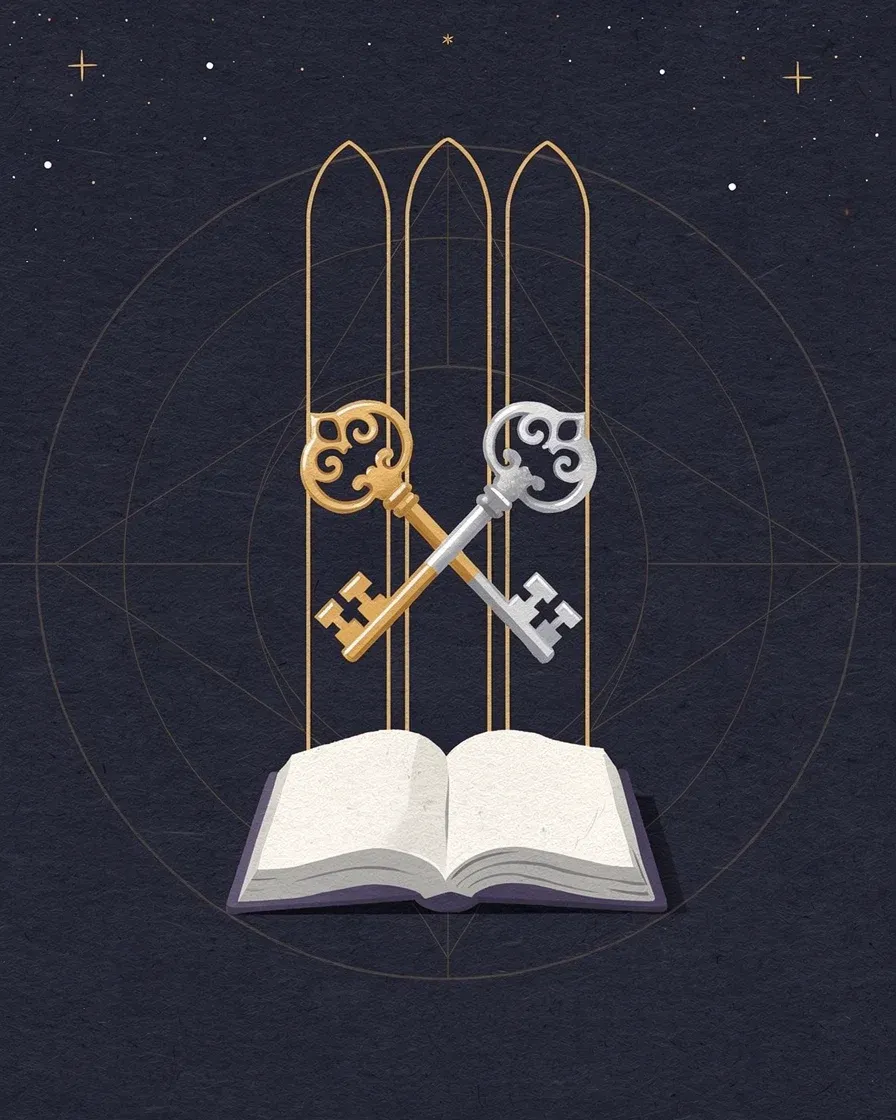
At the root of this tail sits 5 The Hierophant, the keeper of tradition, teaching and shared values. Picture someone who once held authority over what was right: a teacher, an elder, a guardian of a family's rules or a community's faith. The old pattern suggests that this role was handled badly. Perhaps the teachings were twisted to serve personal ends, perhaps the student was abandoned, or perhaps the rules themselves were thrown out in anger instead of being renewed. Whatever the image, the root task is about your relationship with knowledge, mentors and moral structure.
The middle layer is 20 Judgement, the arcana of family, ancestry and awakening. Here the story turns toward kin. Judgement in a tail often points to broken bonds between generations: a parent and child who stopped speaking, a family that passed down resentment instead of wisdom, or a person who judged their elders so harshly that the line of inheritance snapped. The lesson of the Hierophant gets tangled with family history, so questions of belief and questions of belonging become hard to separate.
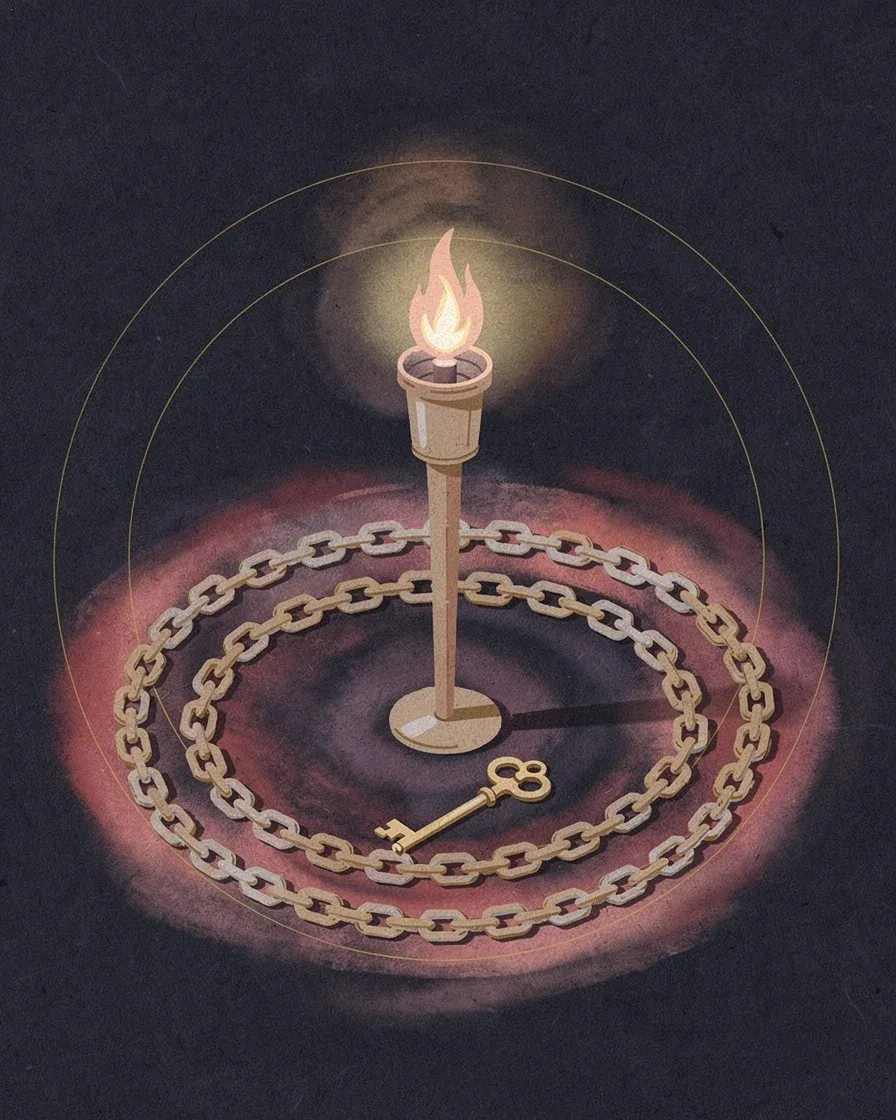
Closest to the present is 15 The Devil, the arcana of desire, temptation and power over others. This is the layer you are most likely to feel in your week. The Devil adds charm, intensity and a sharp eye for what people want, along with a pull toward excess, control or attachments that are hard to leave. When it meets an unresolved Hierophant, rebellion can become its own kind of dogma: you reject every rule handed to you, yet find yourself bound by habits, people or cravings that you never consciously chose.
Taken together, 15-20-5 reads like a teacher who broke a sacred promise, a family that never forgave it, and a present self who carries both the rebellion and the hunger. None of this is a sentence. It is a map that shows where your energy tends to leak, and where your deepest authority can be rebuilt on honest ground.
What this life asks of you
This tail asks you to rebuild your inner rulebook from scratch, keeping what feels true and releasing what was only fear or habit. Concretely, it asks you to stop defining yourself only by what you oppose, to make peace (inside yourself, at least) with the elders and teachers who disappointed you, and to notice where pleasure, control or dependence quietly runs your choices. When you teach, mentor or advise, the work is to do it cleanly: no manipulation, no hidden agenda, no using knowledge as leverage.
How it can show up
- You feel a jolt of resistance the moment someone tells you how things should be done, even when the advice is sensible.
- Relationships with parents, grandparents or former mentors carry old tension, distance or a story of betrayal.
- You are drawn to forbidden or unconventional ideas, and sometimes adopt them mainly because they shock the people around you.
- People seek your guidance, yet you hesitate to claim the role of teacher or worry about being a fraud.
- Habits such as overspending, late nights, or intense relationships are hard to put down once they start.
- You can read what others want with uncanny accuracy and occasionally use that to steer them.
- Family gatherings leave you either drained or defiant, rarely simply at ease.
Ways to work with it
- Write two lists: values you inherited and kept, and values you inherited and rejected. Mark which rejections came from your own reflection and which came from anger.
- Choose one mentor, teacher or elder who disappointed you and write them an unsent letter naming both the harm and anything you still learned from them.
- For one week, note each time you feel the urge to push back against a rule. Ask whether the rule is actually wrong or whether being told is the real trigger.
- Pick one habit that feels like it has a hold on you and track it for seven days without judging, just recording when, where and what you were feeling right before.
- When you share advice, check your motive first: are you helping the person see clearly, or nudging them toward what benefits you?
- Draw a simple family tree and next to each name write one strength and one wound you believe was passed down. Look for the patterns you want to end with you.
Questions people ask
What does the 15-20-5 karmic tail mean?
The 15-20-5 karmic tail describes a pattern around tradition, teaching and family. Its root, 5 The Hierophant, points to an old misuse or rejection of moral authority. 20 Judgement brings in broken family bonds, and 15 The Devil, the closest layer, adds temptation, rebellion and strong attachments. The task is to build values you genuinely own.
Is the 15-20-5 karmic tail bad?
No. A karmic tail is not a punishment or a bad omen. It simply shows a theme that tends to repeat until you look at it consciously. People with 15-20-5 often have real charisma, insight into human motives and a gift for teaching. The tail shows where those gifts can go off course, which is useful information, not a verdict.
How do I work through my 15-20-5 karmic tail?
Start by examining your relationship with rules, mentors and family expectations. Notice where you rebel by reflex and where you are quietly bound by habits or people. Practices like writing about inherited values, tracking a sticky habit and checking your motives before giving advice help turn the pattern into self-knowledge rather than repetition.
Why does the Devil appear in my karmic tail?
In a tail, 15 The Devil usually points to themes of desire, control and dependence that are closest to the surface of your life. It does not mean anything sinister about you. It tends to show up as intensity, magnetism and a tendency to get hooked, and it asks you to choose your attachments with open eyes.